
%20Providers%20in%20the%20UK%20for%202026.avif)
Microsoft Sentinel is powerful.
But without the right provider, it quickly becomes expensive, noisy, and dangerously underutilised.
Most UK organisations never unlock even half of its automation, threat detection, or AI-driven investigation capabilities simply because their internal teams are stretched thin or lack dedicated Sentinel expertise.
That gap creates blind spots, slow response times, and compliance risks that attackers exploit every day.
These 7 UK providers specialise in turning Sentinel into a fully optimised, high-precision security operations engine.
They know how to fine-tune analytics, reduce alert noise by up to 90 percent, automate incident response, and deliver true 24/7 protection at a predictable cost.
Who This Guide Is For
This guide is designed for UK IT Directors, IT Managers, CISOs, Security Operations Leaders, and Compliance teams who need a reliable, modern SIEM strategy without the complexity of managing it alone. It is equally valuable for SMEs that lack 24/7 SOC resources, as well as organisations planning to migrate away from legacy SIEM platforms like Splunk, QRadar, LogRhythm, or AlienVault. If you are responsible for improving threat detection, tightening compliance, or reducing the cost of security operations, this guide will help you choose the right Microsoft Sentinel or SIEM partner for 2026.
The 2026 Business Case for Managed SIEM and Microsoft Sentinel Monitoring in the UK
Cyber threats against UK organisations are escalating fast, with ransomware, phishing, business email compromise, and identity-based attacks now targeting businesses of every size. At the same time, regulatory expectations from bodies such as NCSC, ISO 27001, FCA, GDPR, and NHS DSPT demand stronger visibility, better logging, and provable incident response capabilities.
Building an in-house SOC has become increasingly unrealistic. UK salary benchmarks for Security Analysts, SOC Leads, and Cloud Security Engineers continue to rise, making 24/7 coverage financially unviable for most organisations. As cloud adoption accelerates, businesses generate far more telemetry than internal teams can analyse without advanced SIEM analytics and automation.
Modern security operations in 2026 require a blend of SIEM, SOAR, continuous threat hunting, identity protection, and rapid incident response. Managed SIEM and Microsoft Sentinel providers deliver this capability at scale, giving UK organisations the speed, expertise, and operational resilience they cannot achieve alone.
How We Selected the Top SIEM and Microsoft Sentinel Providers
To ensure this list reflects the most capable and trustworthy SIEM and Microsoft Sentinel providers in the UK, we evaluated each organisation against strict technical, operational, and compliance-focused criteria. Only providers that met or exceeded these standards were included.
We prioritised teams operating a UK-based SOC, ensuring local threat understanding and data handling aligned with UK regulations. Providers needed proven Microsoft Sentinel specialisation, with strong expertise in detection engineering, KQL analytics, UEBA configuration, custom playbooks, and SOAR automation. We also assessed threat hunting maturity, the ability to build tailored detection content, and the strength of their incident response processes.
Compliance support was another critical factor, including experience with ISO 27001, FCA, GDPR, NHS DSPT, and NCSC CAF frameworks. Finally, we reviewed real-world customer case studies, platform outcomes, response times, and UK data sovereignty options to validate performance and reliability.
What Makes a Great Microsoft Sentinel Provider in the UK
Choosing a Microsoft Sentinel provider in 2026 requires far more than basic SIEM monitoring. The best UK providers combine deep cloud security expertise with automation engineering, advanced analytics, and continuous optimisation. These are the capabilities that separate true Sentinel specialists from generic MSSPs.
A strong provider must excel in KQL query engineering, building precise detection logic and transforming noisy telemetry into actionable insights. They should be capable of creating custom analytics rules, tailored to your industry, risks, and compliance requirements, rather than relying only on Microsoft defaults. Effective integration of threat intelligence feeds is essential for blocking emerging attacks and enriching investigations with real context.
Top-tier teams also deliver mature SOAR capabilities using Logic Apps, including automated playbooks for identity compromise, endpoint alerts, phishing incidents, and privilege escalation. Seamless alignment across Azure, Microsoft Defender, Entra ID, and Microsoft 365 is critical to eliminate gaps in visibility and response.
A great provider also manages watchlists, workbooks, dashboards, and reporting to ensure your SOC has complete, real-time situational awareness. And importantly, they optimize Sentinel cost efficiency by managing log retention, table usage, data ingestion patterns, and tiering strategies, ensuring the platform remains both powerful and cost-effective.
These combined capabilities define what a truly modern UK-based Sentinel partner must deliver to keep organisations secure in 2026.
Why UK Organisations Are Moving from Legacy SIEM to Microsoft Sentinel
Many UK organisations are actively shifting away from legacy SIEM platforms such as Splunk, QRadar, LogRhythm, and AlienVault in favour of Microsoft Sentinel. The primary driver is cost efficiency. Traditional SIEMs rely on heavy infrastructure and high ingestion licensing costs, while Sentinel’s cloud-native model offers more predictable, scalable pricing and significantly lower operational overhead.
Deployment is also faster. Sentinel can be operational within days, not months, thanks to automated connectors, native cloud integrations, and zero on-prem maintenance. Its cloud-native scalability ensures it grows with your environment without constant hardware refreshes or storage expansion.
Sentinel includes UEBA (User and Entity Behaviour Analytics) out of the box, improving insider threat and identity-based attack detection without additional licensing. Its ability to correlate signals across the entire Microsoft XDR ecosystem (Defender for Endpoint, Defender for Identity, Defender for Cloud, Entra ID, and Microsoft 365) gives organisations deeper visibility than most legacy SIEMs can achieve.
The reduced maintenance burden, automatic updates, and continual analytics improvements mean internal teams spend less time tuning the platform and more time investigating real threats. Combined with modern detection engineering, automation, and threat intelligence-driven analytics, Sentinel delivers a more agile, effective security operations experience for UK businesses upgrading from legacy SIEM.
Top 7 SIEM & Microsoft Sentinel Security Monitoring Providers in the UK
Here is a detailed overview of the top SIEM and Microsoft Sentinel providers in the UK, highlighting their expertise, ideal use cases, strengths, limitations, and UK-specific advantages.
1. CyberQuell
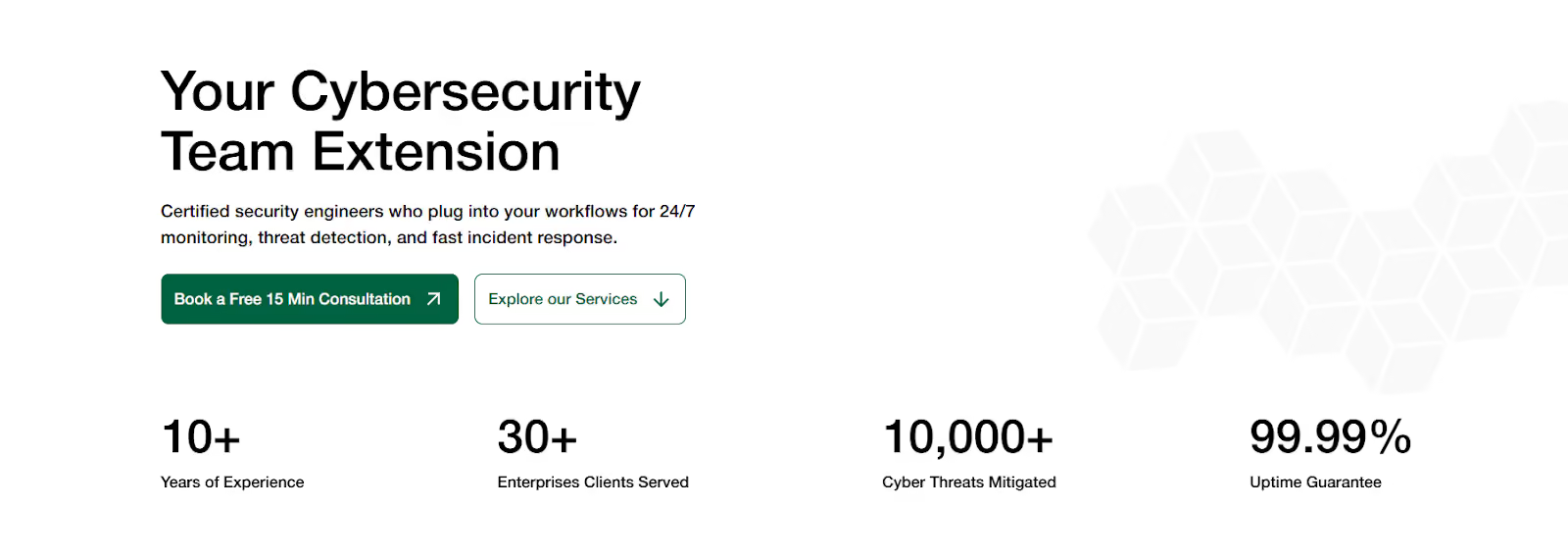
Overview: CyberQuell is a UK-based managed security provider specialising in Microsoft Sentinel and cloud-native SIEM deployments. With a strong focus on threat detection, automation, and compliance, CyberQuell delivers a fully managed 24/7 SOC tailored for UK organisations.
Sentinel / SIEM Expertise: Deep Microsoft Sentinel expertise, including KQL query engineering, custom analytics rules, SOAR playbooks, UEBA, and seamless integration across the Microsoft ecosystem.
Best For: SMEs, mid-market companies, regulated sectors, and cloud-native organisations seeking complete 24/7 monitoring without building an internal SOC.
Strengths: Rapid deployment, proactive threat hunting, automated incident response, cost optimisation, and full UK data residency compliance.
Limitations: Focused primarily on Microsoft Sentinel; organisations using multiple legacy SIEMs may require migration planning.
UK-Specific Advantages: UK-based SOC, compliance expertise with NCSC, ISO 27001, FCA, GDPR, NHS DSPT, and local support with UK data centres.
CyberQuell also operates a white-label SOC partnership model for managed service providers, deploying Microsoft Sentinel per-client through Azure Lighthouse for delegated multi-tenant management. In a documented partnership, CyberQuell onboarded 40+ SMB clients across healthcare, legal, and retail sectors — detecting and containing 127 incidents in the first six months with an average response time of 8 minutes. Read the white-label SOC partnership case study for the full architecture and incident results.
2. Proficio
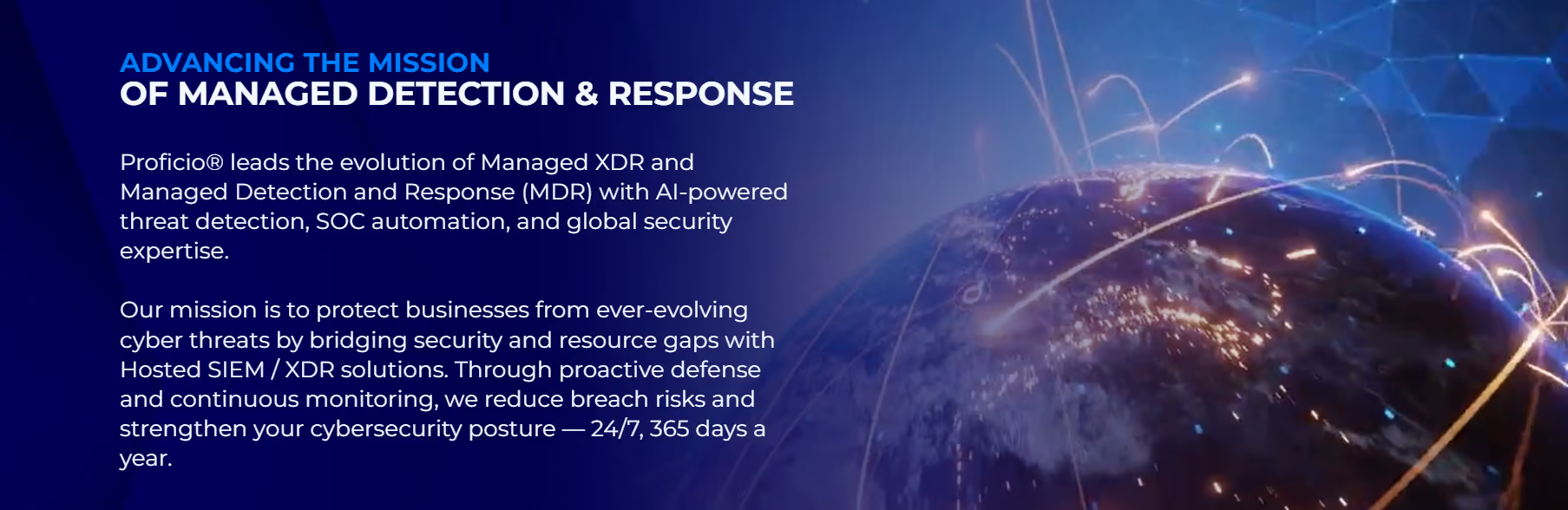
Overview: Proficio provides global managed SIEM and Sentinel services with a strong UK presence and 24/7 SOC coverage.
Sentinel / SIEM Expertise: Microsoft Sentinel and multi-SIEM support with advanced detection and incident response.
Best For: Mid-market to enterprise organisations requiring continuous monitoring and threat intelligence integration.
Strengths: Global threat intelligence, mature SOC workflows, high automation maturity.
Limitations: Primarily enterprise-focused; smaller SMEs may find cost higher.
UK-Specific Advantages: SOC staffed with UK-based analysts and compliance experience for regulated sectors.
3. NTT Ltd.
Overview: A multinational IT services company with extensive experience in managed security and SIEM deployments.
Sentinel / SIEM Expertise: Microsoft Sentinel, Splunk, QRadar, and integrated XDR solutions.
Best For: Large enterprises, government agencies, and regulated industries.
Strengths: Comprehensive global coverage, robust compliance frameworks, and strong incident response capabilities.
Limitations: May be slower to customize for smaller UK-specific deployments.
UK-Specific Advantages: Local SOC presence, UK data residency, and industry compliance expertise.
4. Trustwave
Overview: Trustwave delivers managed SIEM, Sentinel services, and threat intelligence with global SOC support.
Sentinel / SIEM Expertise: Microsoft Sentinel, Splunk, and other SIEM platforms; strong focus on threat intelligence integration.
Best For: Mid-market to large organisations seeking threat intelligence-driven monitoring.
Strengths: Threat intelligence integration, compliance reporting, and SOC automation.
Limitations: Less focus on cloud-native Sentinel optimisation.
UK-Specific Advantages: SOC support for UK-based clients, compliance guidance aligned with local regulations.
5. Secureworks

Overview: Managed SIEM and Sentinel provider with extensive threat hunting and XDR integration experience.
Sentinel / SIEM Expertise: Microsoft Sentinel, Splunk, QRadar; advanced threat analytics and response orchestration.
Best For: Enterprise organisations requiring complex correlation and threat intelligence.
Strengths: Mature SOC processes, global threat intelligence, advanced analytics.
Limitations: Less tailored for small UK SMEs; premium pricing.
UK-Specific Advantages: UK-compliant SOC operations, local data handling, and regulatory support.
6. Exabeam

Overview: Focused on advanced SIEM and UEBA solutions, including Microsoft Sentinel integration for enhanced analytics.
Sentinel / SIEM Expertise: Microsoft Sentinel integration, automated incident response, and user behaviour analytics.
Best For: Mid-market and enterprise organisations needing advanced UEBA capabilities.
Strengths: Strong analytics, anomaly detection, and automation.
Limitations: Requires integration with existing SIEMs; not fully managed in all cases.
UK-Specific Advantages: Local support and compliance alignment with UK standards.
7. Atos
Overview: Atos offers managed SIEM and Sentinel services with global experience and a UK-based SOC footprint.
Sentinel / SIEM Expertise: Microsoft Sentinel, multi-SIEM integration, threat hunting, and automation.
Best For: Large enterprises, government, and regulated industries.
Strengths: Broad service coverage, compliance expertise, global SOC network.
Limitations: Less flexible for rapid SME deployment.
UK-Specific Advantages: SOC located in the UK, strong regulatory compliance support, local customer engagement.
Managed SIEM vs In-House SOC
What True 24/7 SIEM Monitoring Should Include
For UK organisations relying on Microsoft Sentinel or managed SIEM, 24/7 monitoring must go beyond simple alerting. A truly effective service includes the following core elements:
- Real-Time Detection & Response: Continuous monitoring of all critical systems and endpoints, ensuring threats are identified and addressed immediately.
- Escalation Procedures: Clearly defined workflows for alert prioritisation and escalation to the right teams or stakeholders without delay.
- Threat Hunting: Proactive searches for anomalies, hidden threats, and suspicious behaviours before they escalate into incidents.
- SOAR-Driven Automation: Automated playbooks to investigate, contain, and remediate threats faster while reducing human error.
- Vulnerability Insight Integration: Integration of vulnerability data to correlate potential risks with active threats, improving preventative measures.
- Compliance Reporting: Regular, audit-ready reports aligned with UK regulations such as GDPR, FCA, NCSC, and NHS DSPT.
- Monthly Tuning & Review: Continuous tuning of analytics rules, dashboards, and detection logic to reduce false positives and optimise performance.
Implementing all these elements ensures a UK organisation achieves complete visibility, rapid incident response, regulatory compliance, and cost-effective SOC operations.
Real SOAR Automation Examples for Microsoft Sentinel
Microsoft Sentinel’s true power comes alive when paired with SOAR-driven automation, allowing UK organisations to respond to threats faster, reduce manual workloads, and improve detection accuracy. Here are some practical examples of automation in action:
- Automated Phishing Investigation: Emails flagged as phishing are automatically analysed, malicious links isolated, and suspicious senders blocked without manual intervention.
- Suspicious Login → Auto-Disable Account: Sentinel detects unusual login patterns or impossible travel activity and temporarily disables the affected account until verification is completed.
- Ransomware Indicator Isolation: Any endpoint exhibiting ransomware behaviours is automatically isolated from the network to prevent lateral movement and data encryption.
- Threat Intelligence Matching: Incoming alerts are cross-referenced with threat intel feeds in real time, enriching investigations and prioritising high-risk threats.
- Automated Device Containment: Compromised or high-risk devices are instantly contained, with remediation steps triggered automatically to reduce exposure.
- High-Risk User Detection + Alerts: Sentinel monitors user behaviour analytics and automatically flags high-risk users, sending immediate alerts to the SOC for follow-up.
- Automated Malware Remediation: Detected malware files are automatically quarantined, and endpoint scans are triggered to ensure full eradication.
These automation examples demonstrate how UK organisations can turn Microsoft Sentinel into a proactive, high-efficiency SOC engine, reducing alert fatigue, accelerating response times, and ensuring critical threats are mitigated before they cause harm.
Common Mistakes UK Organisations Make When Choosing a SIEM Provider
Selecting the wrong SIEM provider can leave UK organisations exposed to threats, compliance gaps, and unnecessary costs. Here are the most common mistakes to avoid:
- Choosing SIEM-Only, Not Full SOC Service: Many businesses select a provider that delivers only the software or monitoring dashboards, without 24/7 threat detection, incident response, or proactive threat hunting.
- Not Evaluating Detection Engineering Depth: Effective SIEM requires advanced KQL queries, custom analytics, UEBA, and tuned alerts. Providers lacking detection engineering expertise generate false positives and slow response times.
- No UK Data Residency Guarantee: Using a provider without UK-based SOC or data residency can create compliance risks under GDPR, FCA, NHS DSPT, or NCSC guidelines.
- Not Checking SLAs (MTTD/MTTR): Service Level Agreements for Mean Time to Detect (MTTD) and Mean Time to Respond (MTTR) are crucial. Without clear SLAs, response times can be inconsistent and risky.
- Overpaying for Log Ingestion: Some providers charge for every GB of ingested data without optimisation. Poor cost management leads to inflated bills, especially for cloud-native environments.
- Choosing Providers with No SOAR Experience: Without automation playbooks, alerts remain manual, response times slow, and analyst workload skyrockets. Modern Sentinel services must include SOAR-driven automation to be effective.
Avoiding these mistakes ensures that your SIEM investment delivers real protection, compliance assurance, and cost efficiency for UK organisations.
How Much Does Managed SIEM (Microsoft Sentinel) Cost in the UK?
Understanding the cost of managed SIEM and Microsoft Sentinel services in the UK is critical for informed decision-making. Pricing typically follows two main models: per-endpoint and per-GB log ingestion.
- Per-Endpoint Model: You pay a fixed fee for each monitored device, server, or application. Ideal for organisations with a predictable number of assets.
- Per-GB Ingestion Model: Charges are based on the volume of logs ingested into Sentinel, which can vary with cloud adoption and activity spikes.
Typical UK Pricing Ranges:
- SMEs: £5k–£25k/month
- Mid-Market: £10k–£40k/month
- Large Enterprises: £20k–£60k/month
Key Variables That Influence Cost:
- Log ingestion volumes and data retention policies
- Scope of monitoring and incident response (24/7 coverage vs business hours)
- Multi-cloud or hybrid environment integrations
- Threat intelligence and advanced analytics requirements
- Level of SOAR automation and threat hunting
Hidden Costs to Watch For:
- Extra charges for high-volume log ingestion
- Licensing for connectors or third-party integrations
- Additional fees for compliance reporting or custom dashboards
- Onboarding, migration, and professional services
Pricing Transparency Evaluation Checklist:
- Does the provider clearly define what’s included in the base fee?
- Are there limits on log volume or endpoints before overage charges apply?
- Is 24/7 monitoring and incident response included?
- Are SOAR automation and threat hunting part of the service or extra?
- Are compliance reporting and audit support included in the cost?
By evaluating these factors, UK organisations can compare providers fairly, avoid unexpected charges, and select a managed SIEM partner that delivers both protection and predictable costs.
For UK organisations in 2026, outsourcing SIEM and Microsoft Sentinel monitoring is often the most practical choice, especially for SMEs, mid-market companies, or businesses lacking 24/7 SOC capability. Sentinel is the right choice when your organisation is cloud-native, uses Microsoft 365/Azure workloads, or needs advanced threat detection, automation, and compliance reporting without the overhead of building an internal SOC.
When evaluating providers, focus on UK-based SOC capability, Sentinel expertise, SOAR automation, threat hunting proficiency, and compliance experience. Compare SLAs, pricing models, and real-world customer outcomes to ensure you select a partner that delivers measurable security value.
CyberQuell stands out as a trusted UK leader, offering fully managed Sentinel services with local SOC, automated threat response, and cost-efficient, scalable monitoring.
Request a free consultation call, or get customized pricing with CyberQuell today and secure your organisation against 2026’s evolving cyber threats.
%20for%20Microsoft%20365%20(1).png)
.png)
.png)
